



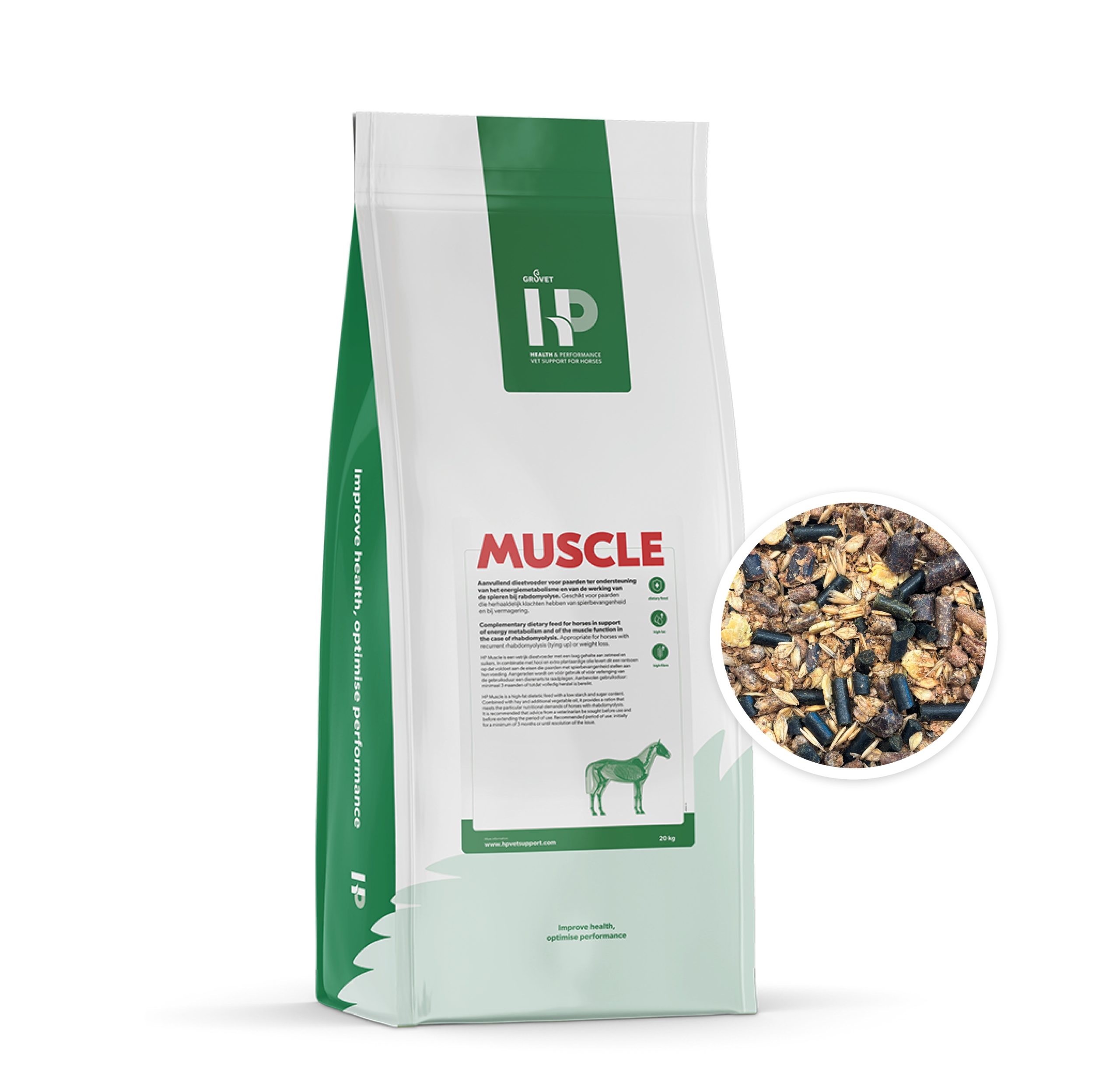
HP Muscle (formerly Bonpard Muscle)
HP Muscle by Health & Performance is a specially formulated dietary feed for horses, developed to support energy metabolism, normal muscle function, and the maintenance of a healthy body condition. It is particularly suitable for horses experiencing recurrent exertional rhabdomyolysis (tying-up) and horses that have difficulty maintaining their body weight.
HP Muscle was previously sold under the name Bonpard Muscle. Following the transition from Bonpard to Health & Performance, the original formulation has been retained.
Nutrition plays an important role in normal muscle function. Particularly in horses with certain muscle metabolism disorders, it can be beneficial to provide a greater proportion of dietary energy from fats and fiber rather than relying primarily on starch-rich concentrate feeds.
HP Muscle has been developed according to this nutritional approach. It contains vegetable oils, selected fiber sources, and proteins with a suitable amino acid profile. The formula is also enriched with vitamins, minerals, and trace elements, including vitamin E and selenium.
Thanks to this combination, HP Muscle can be an important part of a targeted nutritional program for horses with muscle problems or increased energy requirements. The feed is suitable for long-term use when the feeding program is adapted to the horse’s individual needs.
Properties and benefits
HP Muscle combines several nutrients that support muscle metabolism, energy supply, and the overall condition of horses.
- Energy from fats: contains vegetable oils, including sunflower oil and flaxseed oil. Fats provide a concentrated source of energy and can help reduce reliance on starch-rich concentrate feeds.
- Support for muscle metabolism: developed as part of a nutritional strategy for horses experiencing certain forms of recurrent exertional rhabdomyolysis.
- Fiber-rich formulation: ingredients such as alfalfa, oat hulls, and apple pulp provide dietary fiber that supports normal digestion and fermentation in the cecum and large intestine.
- High-quality protein sources: provide amino acids that are important for the maintenance and development of body tissues, including muscle.
- Vitamin E and selenium: support antioxidant protection of muscle cells and contribute to normal muscle function.
- Omega-3 and omega-6 fatty acids: derived from ingredients including flaxseed, flaxseed oil, and sunflower oil. These fatty acids contribute to normal cell membrane function and healthy skin and coat condition.
- Vitamins and minerals: the formula is enriched with essential nutrients to support the horse’s daily nutritional requirements.
According to the manufacturer, HP Muscle contains 9.9% crude fat, 15.6% crude fiber, 16.2% starch, and 4.1% sugar. It therefore provides a relatively high proportion of fat and fiber. Since the combined starch and sugar content is 20.3%, the complete diet should be carefully evaluated in horses requiring a particularly strict restriction of these carbohydrates.
When to use HP Muscle?
HP Muscle is particularly useful for horses whose energy supply and muscle metabolism require special nutritional attention, including:
- Horses experiencing recurrent exertional rhabdomyolysis (tying-up) when an adapted feeding program is indicated.
- Horses with certain muscle metabolism disorders for which a diet providing more energy from fats is appropriate.
- Horses that have difficulty maintaining their body weight or muscle mass.
- Horses requiring additional energy without substantially increasing the amount of starch-rich concentrate feed.
- Performance horses requiring a nutritional program specifically adapted to their muscle metabolism.
- Horses that need a specialized feeding program over an extended period.
Not all forms of tying-up have the same underlying cause. For some muscle disorders, restricting starch and sugar intake is more important than for others. The most appropriate nutritional strategy therefore depends on the diagnosis, body condition, and training program.
For horses experiencing weight loss, identifying the underlying cause is equally important. HP Muscle can help provide additional energy through fats and fiber-rich ingredients, but an appropriate feeding program always starts with sufficient high-quality forage.
Composition
Alfalfa, barley flakes, oat hulls, wheat middlings, apple pulp, wheat bran, oat flakes, toasted soybean flakes, sunflower oil, flaxseed oil, carob, striped sunflower seeds, sodium chloride, flaxseed, calcium carbonate, wheat, magnesium oxide, sunflower seed meal, molasses, and soybean oil.
Added nutrients include vitamin A, vitamin D3, vitamin E, vitamin C, biotin, copper, iron, selenium, iodine, zinc, and manganese.
The combination of vegetable oils, fiber-rich ingredients, and protein sources provides the foundation of the product’s energy supply. The added vitamins and minerals support normal muscle function and other physiological processes.
Directions for use and dosage
HP Muscle is fed daily in combination with suitable forage. According to the feeding program developed by Health & Performance, additional vegetable oil may also be included to achieve the desired proportion of dietary energy from fats.
One level standard feed scoop contains approximately 950 g of HP Muscle. Weighing the feed is recommended, as the actual weight per scoop may vary.
The recommended amount depends on the horse’s body weight and average workload. The following quantities are taken from the manufacturer’s feeding program and are expressed per 100 kg of body weight per day.
Horses and ponies weighing less than 250 kg:
- At rest: 400 g HP Muscle, 1.3 kg coarse-stemmed hay, and 25 mL vegetable oil.
- Light work: 450 g HP Muscle, 1.6 kg hay, and 25 mL oil.
- Moderate work: 500 g HP Muscle, 1.8 kg hay, and 36 mL oil.
- Heavy work: 600 g HP Muscle, 2.0 kg hay, and 45 mL oil.
Horses weighing 250–450 kg:
- At rest: 350 g HP Muscle, 1.2 kg hay, and 20 mL vegetable oil.
- Light work: 450 g HP Muscle, 1.4 kg hay, and 23 mL oil.
- Moderate work: 550 g HP Muscle, 1.5 kg hay, and 26 mL oil.
- Heavy work: 600 g HP Muscle, 1.6 kg hay, and 30 mL oil.
Horses weighing more than 450 kg:
- At rest: 300 g HP Muscle, 1.3 kg hay, and 20 mL vegetable oil.
- Light work: 400 g HP Muscle, 1.4 kg hay, and 28 mL oil.
- Moderate work: 500 g HP Muscle, 1.4 kg hay, and 28 mL oil.
- Heavy work: 600 g HP Muscle, 1.5 kg hay, and 30 mL oil.
Example for a horse weighing 600 kg (1,320 lb) performing light work:
- HP Muscle: 2.4 kg daily.
- Coarse-stemmed hay according to the manufacturer’s feeding program: 8.4 kg daily.
- Vegetable oil: 168 mL daily.
This is an example calculation based on the manufacturer’s recommendations. The actual forage allowance must be adapted to its nutritional value, dry matter content, and the individual horse’s requirements. Many horses will require more forage than the amount indicated in this example.
Gradual dietary transition:
The transition to HP Muscle should be gradual. The manufacturer recommends allowing approximately four weeks. Gradually replace the existing concentrate feed with HP Muscle until the intended daily amount is reached.
When additional vegetable oil is part of the feeding program, introduce it gradually over a further one to two weeks.
Divide the daily amount of HP Muscle between at least two feedings, preferably after the horse has received forage.
Important: the combination of HP Muscle, suitable forage, and, when necessary, vegetable oil forms a complete nutritional program. Do not automatically add other vitamin and mineral supplements. Total energy, protein, forage, and micronutrient requirements should be considered when determining the appropriate feeding amounts.
Packaging and duration of use
HP Muscle is supplied in a 20 kg bag.
The duration of use depends on body weight and the daily feeding amount:
- 1.5 kg daily: approximately 13 days.
- 2.0 kg daily: approximately 10 days.
- 2.4 kg daily: approximately 8 days.
- 2.5 kg daily: approximately 8 days.
- 3.0 kg daily: approximately 6–7 days.
Important shelf-life information: according to the manufacturer, HP Muscle has a relatively short maximum shelf life of six months from the manufacturing date. This does not mean six months from the purchase date or from opening the bag.
Always check the expiration date printed on the packaging. Store the feed tightly closed in a cool, dry place, protected from moisture and direct sunlight.
Frequently asked questions about HP Muscle
Is HP Muscle the same as Bonpard Muscle?
Yes. HP Muscle was previously sold under the name Bonpard Muscle. Following the transition to Health & Performance, the product name changed, but according to the manufacturer, the original formulation remained unchanged.
Is HP Muscle suitable for horses with tying-up?
HP Muscle has been specially developed as a dietary feed for horses experiencing certain forms of recurrent exertional rhabdomyolysis (tying-up). It provides part of its energy through fats and fiber-rich ingredients. Because tying-up can have different underlying causes, the feeding program should be adapted to the specific muscle disorder.
Does HP Muscle always require additional oil?
The manufacturer has developed a feeding program combining HP Muscle with forage and vegetable oil. The amount of oil required depends on the horse’s body weight and workload. Any additional oil should be introduced gradually.
Can HP Muscle be fed long-term?
Yes. HP Muscle is designed for horses requiring a specialized diet over an extended period. Some horses may need this type of feeding program for several years or even throughout their lives. However, the diet should be reviewed regularly according to body condition, training intensity, and overall health.
Advice from the equine veterinarian
Nutrition plays an important role in managing muscle problems in horses. Particularly in certain forms of recurrent exertional rhabdomyolysis, adjusting the energy sources in the diet can make a significant difference.
I consider HP Muscle an interesting dietary feed because it combines vegetable fats with fiber-rich ingredients and a comprehensive selection of vitamins and minerals. It has been developed for horses that may benefit from obtaining a greater proportion of their energy from fats rather than starch-rich concentrate feeds.
For horses with an appropriate indication, this nutritional approach can help support normal muscle metabolism. However, it is important to consider the specific type of muscle disorder rather than focusing exclusively on the feed. For example, horses with polysaccharide storage myopathy type 1 (PSSM1) often require stricter limitations on starch and sugar intake than horses with certain other muscle disorders.
Because HP Muscle itself contains 16.2% starch and 4.1% sugar, I always evaluate the total daily intake of these carbohydrates when considering the product for horses with PSSM or insulin dysregulation. A specialized feeding program must be appropriate for the specific diagnosis.
HP Muscle can also be an interesting choice for horses that have difficulty maintaining their body weight. Its relatively high fat content provides additional energy without relying exclusively on starch-rich concentrate feeds. For unexplained weight loss, I recommend investigating possible causes, including dental problems, gastric disorders, or other health conditions.
An important consideration is the transition to the new diet. I recommend introducing HP Muscle gradually, following the manufacturer’s four-week transition schedule. If additional vegetable oil is required, this should also be introduced progressively so that the digestive system and metabolism can adapt.
For horses with muscle problems, training management is equally important. Regular, appropriate exercise, sufficient recovery, and avoiding major fluctuations in training intensity are essential components of a successful management program.
My recommendation is to use HP Muscle as part of an individually tailored nutritional and training program. Particularly for horses experiencing recurrent tying-up or difficulty maintaining an appropriate body condition, targeted dietary adjustments can make a meaningful difference.




Reviews
There are no reviews yet.