



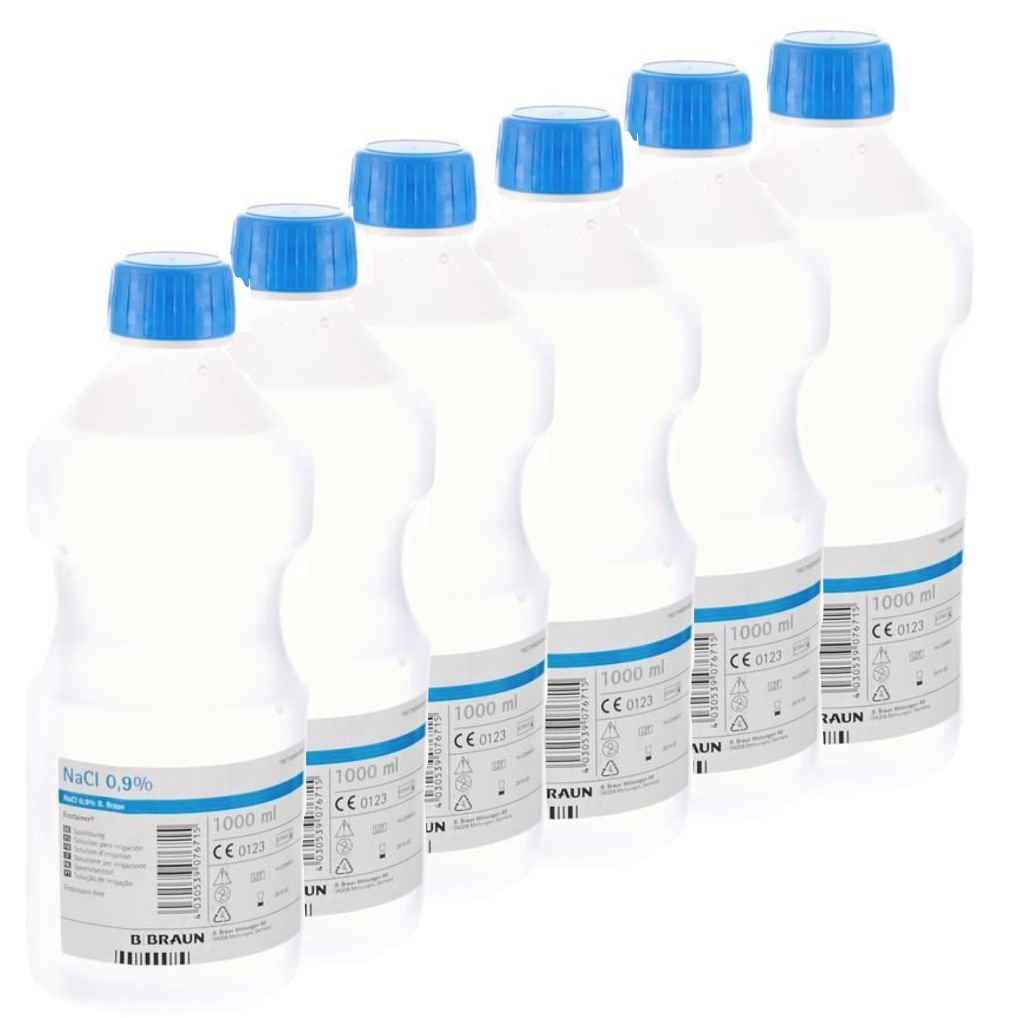
Saline solution
Physiological saline solution (0.9% NaCl) is an isotonic saline solution used for nebulization in horses, for example with the Flexineb nebulizer. It contains sodium chloride at a concentration comparable to that of body fluids and can be used to humidify the respiratory tract or as a diluent for suitable inhalation products.
Nebulization with physiological saline solution is commonly used as a supportive measure in horses with respiratory problems. The solution can be nebulized on its own or used to dilute other products, provided they are suitable for inhalation and the combination is recommended by the attending veterinarian.
Properties and benefits
Physiological saline is an isotonic solution that can help humidify the respiratory tract without the pronounced osmotic effects associated with hypertonic saline solutions.
Nebulization with physiological saline offers several practical applications:
- Airway humidification: helps maintain moisture in the respiratory tract and may contribute to respiratory comfort.
- Support for mucus clearance: airway humidification may help facilitate the clearance of respiratory mucus.
- Dilution of inhalation products: can be used to achieve the required nebulization volume when compatible with the product being administered.
- Nebulizer application: suitable for use as a nebulization fluid when a sterile formulation intended for inhalation is selected.
Physiological saline does not contain bronchodilators, corticosteroids, or antibiotics. It has no proven independent anti-inflammatory effect and does not replace targeted treatment of respiratory diseases.
When to use physiological saline solution?
Nebulization with physiological saline may be considered under veterinary guidance:
- As additional support in horses experiencing airway irritation or increased mucus production.
- In horses with chronic or recurrent respiratory problems, as part of a broader management plan.
- To dilute inhalation products for which physiological saline is an appropriate diluent.
- When additional nebulization volume is required for a suitable inhalation treatment.
Clinical evidence supporting physiological saline as a standalone treatment for equine asthma remains limited. Accurate diagnosis, environmental management, and appropriate medical treatment remain essential in the management of respiratory diseases.
Composition
Sodium chloride, water.
Directions for use and dosage
Physiological saline solution is administered using a suitable equine nebulizer, such as the Flexineb.
Typical volume: 5 to 20 mL per nebulization session, depending on the intended application, nebulizer capacity, and the attending veterinarian’s individual recommendations.
The frequency and duration of use should be determined according to the horse’s clinical condition.
When physiological saline is used to dilute another inhalation product, follow the prescribed dilution ratio. Only combine products whose compatibility and suitability for nebulization have been confirmed.
Important: use only sterile physiological saline solution suitable for inhalation. Follow the manufacturer’s instructions regarding opening, storage, and handling. Do not use a solution if its sterility can no longer be guaranteed.
Always use a clean nebulizer and clean its components according to the manufacturer’s instructions.
Packaging and duration of use
Physiological saline solution is supplied in a pack of 6 bottles of 1,000 mL, providing a total volume of 6 liters.
The volume required per nebulization session generally ranges from 5 to 20 mL. Actual consumption depends on the nebulization protocol and whether the solution is used to dilute other products.
The shelf life after opening depends on the specific packaging and the manufacturer’s instructions. Follow these instructions carefully to prevent microbial contamination.
Advice from the equine veterinarian
Physiological saline is widely used as a carrier solution in equine inhalation therapy. It can be nebulized separately or used as a diluent for certain inhalation products.
Environmental factors play an important role in horses with chronic respiratory conditions, including equine asthma. Reducing exposure to dust, fungal spores, and other airborne irritants is an essential component of respiratory management.
Nebulization with physiological saline may provide additional supportive care, but it should not be considered a replacement for environmental management or targeted medical treatment.
In horses presenting with persistent coughing, nasal discharge, abnormal breathing, or reduced performance, I recommend a targeted respiratory examination. Depending on the clinical findings, endoscopy, tracheal wash, or bronchoalveolar lavage may be indicated.
When using physiological saline to dilute products such as Inhal or Myconal, it is important to follow the recommended dilution ratio and confirm product compatibility beforehand. Not all inhalation products can be safely mixed.




Reviews
There are no reviews yet.