


Vitamin E for horses is essential for normal muscle and nerve function, immune health, and protecting cells against oxidative stress. Horses with limited access to fresh pasture or those undergoing intensive training may benefit from additional vitamin E supplementation. Explore our carefully selected range of supplements containing natural vitamin E without selenium, natural vitamin E combined with selenium, and convenient powdered formulations. Choose the most appropriate supplement based on your horse’s diet, training workload, and individual nutritional requirements.


Showing all 4 results
Vitamin E for horses
Vitamin E is an essential fat-soluble vitamin that plays an important role in equine health and normal physiological function. As an antioxidant, it helps protect body cells against oxidative damage caused by free radicals. Adequate vitamin E intake is particularly important for normal muscle function, nervous system health, and immune function.
Horses obtain vitamin E primarily from fresh pasture. During harvesting, drying, and storage, the vitamin E content of hay gradually decreases. Horses receiving mainly hay or haylage with limited access to fresh grass may therefore not obtain sufficient vitamin E through their daily diet.
Training intensity, age, and health status can also influence vitamin E requirements. Vitamin E supplements for horsesprovide a practical way to complement the daily diet and support adequate vitamin E status.
Which vitamin E supplement is right for your horse?
Our selection includes three supplements containing different forms and combinations of vitamin E.
Natural vitamin E without selenium
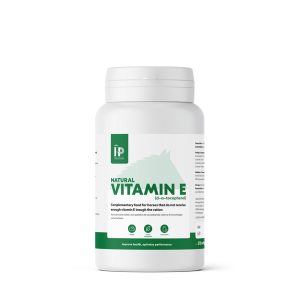
HP Natural Vitamin E by Health & Performance contains natural vitamin E in the form of d-alpha-tocopherol. This form is generally more bioavailable in horses than synthetic vitamin E.
Each softgel contains 400 mg of natural vitamin E, equivalent to approximately 600 IU. The product is supplied in a container with 210 softgels.
Its main advantage is that HP Natural Vitamin E contains no added selenium. This allows vitamin E intake to be increased without simultaneously providing additional selenium.
The supplement is particularly suitable for horses with insufficient dietary vitamin E intake, performance horses with limited access to fresh pasture, and horses with certain muscular or neurological conditions for which additional vitamin E is recommended by a veterinarian.
Natural vitamin E with organic selenium
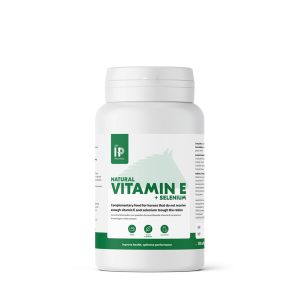
HP Natural Vitamin E + Selenium
HP Natural Vitamin E + Selenium combines natural vitamin E (d-alpha-tocopherol) with organic selenium derived from selenium-enriched yeast.
Both nutrients play important roles in normal muscle function and protecting cells against oxidative stress. Vitamin E primarily protects cell membranes, while selenium is incorporated into several antioxidant enzymes.
Each softgel provides 300 IU of natural vitamin E and 0.5 mg of selenium. The product is supplied in a container with approximately 150 softgels.
This combination is particularly interesting when the horse’s daily diet provides insufficient amounts of both vitamin E and selenium. Because selenium has a relatively narrow safety margin, evaluating total selenium intake from forage, concentrate feed, and other supplements is essential before supplementation.
Vitamin E and selenium in powder form
Floris Vitamin E/Selenium is a powdered complementary feed combining vitamin E and selenium to support normal muscle function and antioxidant protection.
The formula contains vitamin E in the form of alpha-tocopheryl acetate and selenium as sodium selenite. These nutrients contribute to protecting muscle cells against oxidative damage through different physiological mechanisms.
Floris Vitamin E/Selenium is available in a 1 kg container and can easily be mixed with the horse’s daily feed.
This supplement is particularly interesting when additional vitamin E and selenium are both required and a powdered formulation is preferred.
Why is vitamin E important for horses?
Vitamin E performs several essential functions in the horse’s body.
Muscle function and protection against oxidative stress
During physical exercise, the production of reactive oxygen species increases. Vitamin E helps protect cell membranes against oxidative damage and therefore plays an important role in maintaining healthy muscle cells.
Prolonged vitamin E deficiency can contribute to muscle weakness and certain neuromuscular disorders. Adequate vitamin E intake is particularly important for horses undergoing regular intensive exercise.
Nervous system health
Vitamin E is also essential for normal nerve function. Severe or prolonged deficiencies can contribute to certain neurological disorders, including equine motor neuron disease (EMND) and equine degenerative myeloencephalopathy (EDM).
For horses affected by these conditions, targeted vitamin E supplementation may form part of veterinary management, depending on the diagnosis and individual vitamin E status.
Immune system support
Vitamin E is involved in normal immune cell function and protecting body tissues against oxidative stress.
An adequate vitamin E supply therefore supports normal immune function, although additional supplementation in horses with sufficient vitamin E status does not automatically improve resistance to infectious diseases.
Natural or synthetic vitamin E?
Vitamin E is available in several forms. When selecting a supplement, the distinction between natural and synthetic vitamin E is particularly important.
Natural vitamin E (d-alpha-tocopherol) is biologically active and is generally absorbed and utilized more efficiently by horses than synthetic vitamin E. Supplementation with natural vitamin E may therefore produce a greater increase in blood alpha-tocopherol concentrations.
Synthetic vitamin E (dl-alpha-tocopherol or all-rac-alpha-tocopheryl acetate) contains several stereoisomers and differs in biological activity. The chemical form, formulation, and administered quantity all influence the availability of the vitamin.
Bioavailability becomes particularly important in horses with confirmed vitamin E deficiency or increased nutritional requirements. In these situations, natural vitamin E may be a more targeted choice.
Vitamin E with or without selenium?
Vitamin E and selenium are frequently combined because both nutrients contribute to protecting body cells against oxidative damage.
However, they have different physiological functions and cannot fully replace each other.
Vitamin E primarily protects lipids in cell membranes against oxidative damage. Selenium is an essential component of several selenoproteins, including glutathione peroxidase, which participates in antioxidant defense mechanisms.
When additional vitamin E is required without a need for extra selenium, I prefer a supplement without added selenium.
A combination of vitamin E and selenium is most appropriate when the complete diet provides insufficient amounts of both nutrients. Providing additional selenium without evaluating the existing dietary selenium supply is undesirable because excessive intake can be harmful.
When does a horse need additional vitamin E?
Vitamin E requirements depend on several factors, including body weight, diet, training intensity, and health status.
Horses receiving primarily dried or conserved forage with limited access to fresh pasture deserve particular attention regarding vitamin E intake.
Targeted vitamin E supplementation may also be appropriate for performance horses, breeding mares, and horses with certain muscular or neurological conditions.
A balanced diet should always form the foundation of nutritional management. Evaluating total vitamin E intake from forage, concentrate feed, and supplements helps determine whether additional supplementation is necessary.
When a deficiency is suspected, vitamin E status can be assessed by measuring blood alpha-tocopherol concentrations.
Advice from the equine veterinarian
As a veterinarian specializing in equine sports medicine, I pay particular attention to vitamin E in performance horses, horses with muscle disorders, and horses with limited access to fresh pasture.
In many situations, I prefer natural vitamin E without added selenium, such as HP Natural Vitamin E. This allows targeted vitamin E supplementation without unnecessarily increasing selenium intake.
When both vitamin E and selenium are insufficient in the daily diet, a combined supplement such as HP Natural Vitamin E + Selenium or Floris Vitamin E/Selenium may be appropriate.
For horses presenting with muscle weakness, muscle atrophy, stiffness, or neurological signs, I recommend investigating the underlying cause before starting supplementation. Measuring vitamin E status and, when relevant, selenium status helps determine the appropriate supplement and dosage.
